Snippets of Information
Geographical features (Physiographic Divisions) - Lakes of India
* 3 Mar 2026
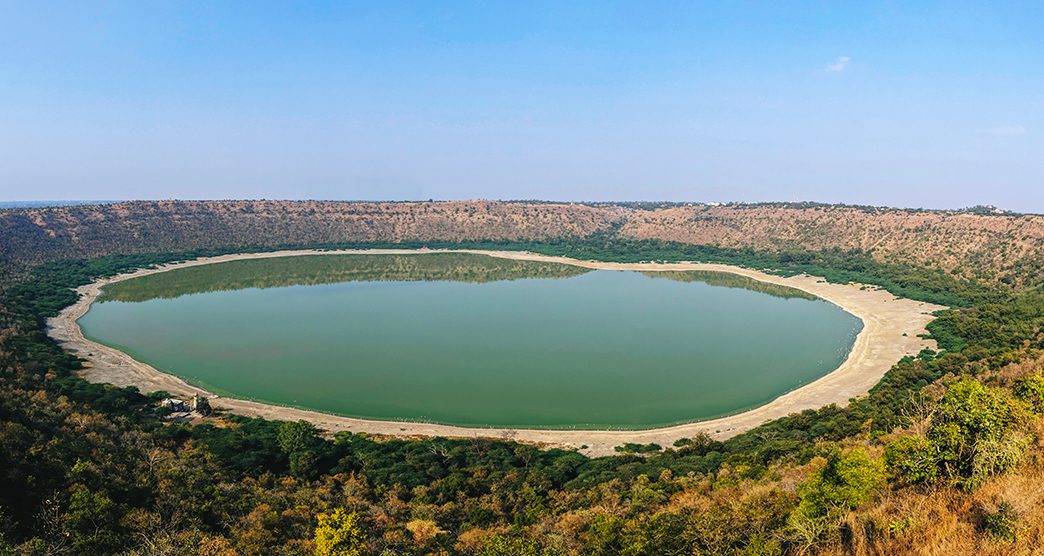
Image Source: incredibleindia.gov.in
Lonar Crater, located in the Buldhana district of Maharashtra formed
by a meteorite impact, is surrounded by lush greenery, diverse
wildlife, and ancient temples. It is believed to have been created
around 52,000 years ago when a high-velocity meteorite struck the
basaltic Deccan Plateau. This impact led to the formation of a nearly
circular depression, which gradually transformed into a saline and
alkaline lake. The crater has drawn the attention of scientists from
around the world, including NASA and the Geological Survey of India, due
to its rare geological and geochemical properties. The ecosystem around
Lonar Crater is unique, supporting a diverse range of flora and fauna.
The Lonar lake itself has two distinct layers of water - one
alkaline and one saline - harboring microorganisms not found anywhere
else on Earth. It is a notified National Geo-heritage Monument.
Source: maharashtratourism.gov.in
Lonar lake, part of Lonar Wildlife Sanctuary has been declared a Ramsar
site, a conservation status conferred by International Ramsar Convention
on Wetlands.
It is the second Ramsar site in the state after Nandur Madhmeshwar Bird
Sanctuary in Nashik district, which was declared a Ramsar site in
January 2020.
Source: Lonar's meteor lake declared Ramsar site by Vivek Deshpande, indianexpress.com, 13 Nov 2020
Some special rocks called shatter cones have also been found by scientists near it.
Nearby destinations: Daitya Sudan Temple, built in the Hemadpanti style
of architecture, Sindkhed Raja, the birthplace of Chhatrapati Shivaji
Maharaj
Source: incredibleindia.gov.in
|